

Grande not Petite
A forgotten French schism and the quiet heresy of choosing which parts of the Church to obey.


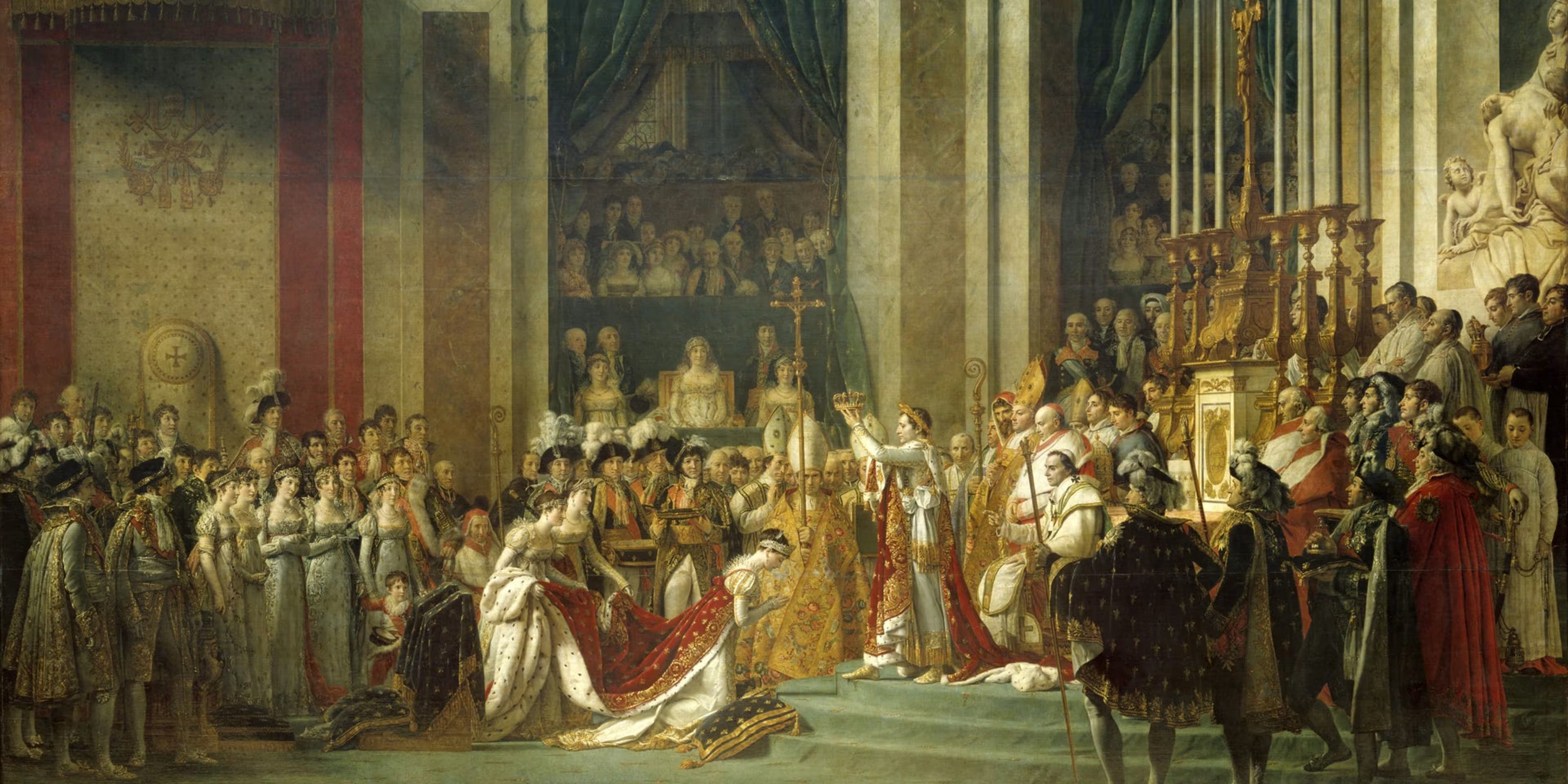
We all know them. People who say they are Catholic and who support moral monstrosities such as abortion, euthanasia or sodomy. The mentality that leads to such a spiritual schizophrenia had already been captured by Pope St Pius X more than a century ago when he inserted this paragraph in the Oath Against Modernism:
‘I also condemn and reject the opinion of those who say that a well-educated Christian assumes a dual personality – that of a believer and at the same time of a historian, as if it were permissible for a historian to hold things that contradict the faith of the believer, or to establish premises which, provided there be no direct denial of dogmas, would lead to the conclusion that dogmas are either false or doubtful’.
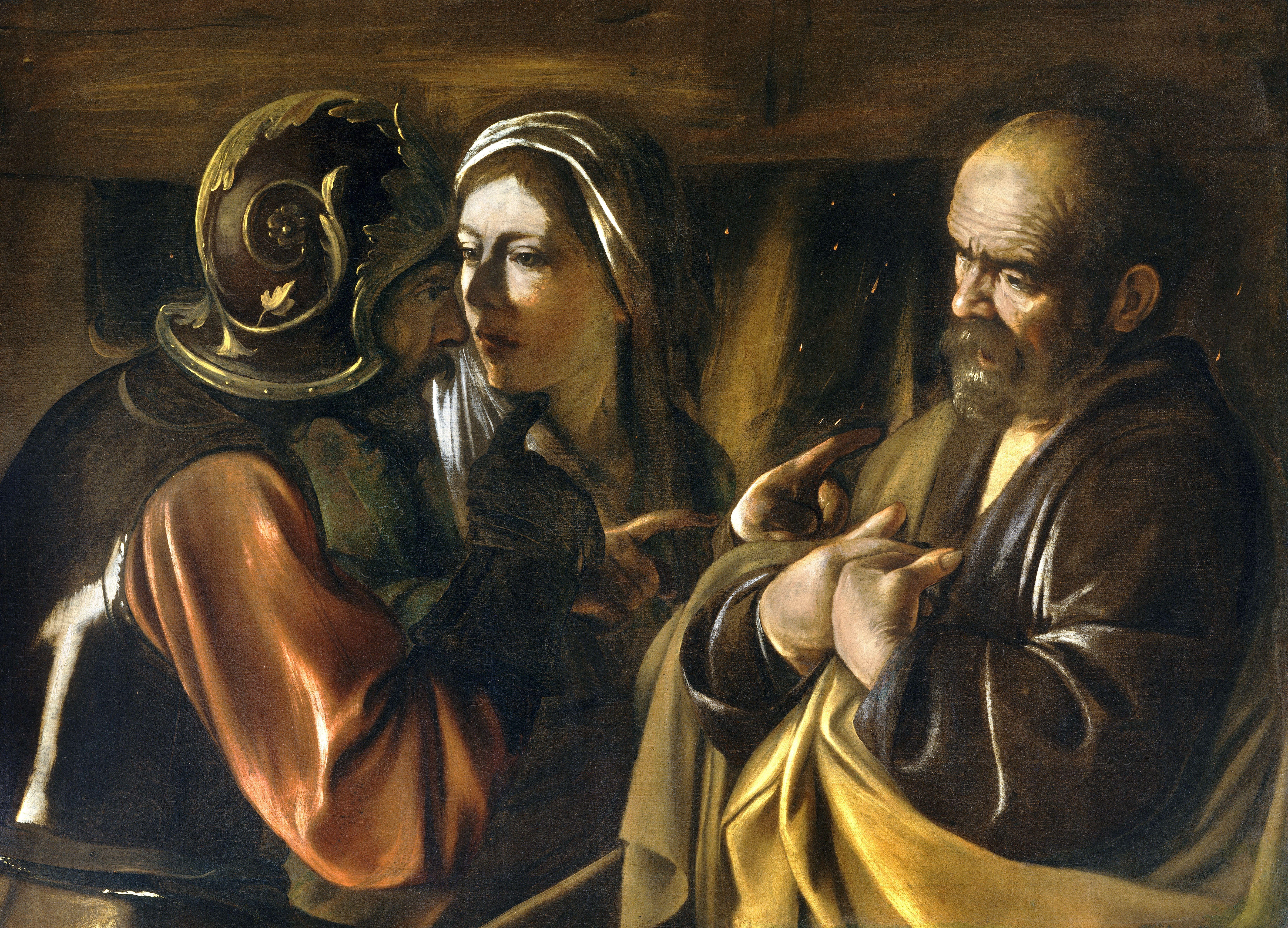
Professing One Thing and Living Another
This mentality, which pinpoints a well-known tactic of the Modernists, namely that one should stay in the Church in order to change it from the inside, reveals something deeper in human nature, that is, the propensity we have for living duplicitous lives, professing one thing and living another.
St Paul gave expression to this duality inherent in all of us, sons and daughters of Adam and Eve, when he wrote: ‘I do not understand my own actions. For I do not do what I want, but I do the very thing I hate. Now if I do what I do not want, I agree that the law is good. So then it is no longer I that do it, but sin which dwells within me. For I know that nothing good dwells within me, that is, in my flesh. I can will what is right, but I cannot do it. For I do not do the good I want, but the evil I do not want is what I do. Now if I do what I do not want, it is no longer I that do it, but sin which dwells within me’ (Rm 7:15-20).
There is, however, one big difference. Paul says, and with him all true believers, that he sometimes does what he knows is wrong, and therefore takes responsibility for having broken the commandments. The Modernist, on the other hand, acknowledges something is wrong, but then tries to convince himself that somehow it is not wrong. Admittedly, most Modernists, when cornered to speak their mind, will be evasive and avoid explicit contradictions. But the reality of the tendency to duplicity is there, and it lays traps for all of us.
It would not seem excessive to say that as soon as we try to cover up for ourselves, hide our real sentiments, put on masks and build up self-justifying facades, we are imitating Adam and Eve who, after their first sin, tried to pass the buck to someone else. This is why I wrote in an earlier instalment in this journal that Modernism really began in the Garden of Eden, and none of us can claim it holds no sway over us. Whenever we play the game of attempting to justify what we know is wrong, we are already Modernists, and this is precisely why Modernism is the synthesis of all heresies, and so difficult to root out.
Nor is this tendency to be found only in those who play with doctrinal or moral ambiguities. It is sometimes found in those whose record on both those accounts would seem to be impeccable, but whose actions present obvious and glaring contradictions in terms of loyalty. For instance, one cannot be loyal and disloyal at the same time to the same superior. To say that one is loyal and then to act disloyally is nothing other than giving in to the mentality of the Catholic who knows his faith but who, for what he might call historical reasons, breaks the sacred bonds of communion. It is to be a Modernist, not in belief, but in act. An example from history will serve to illustrate this well.
La Petite Église
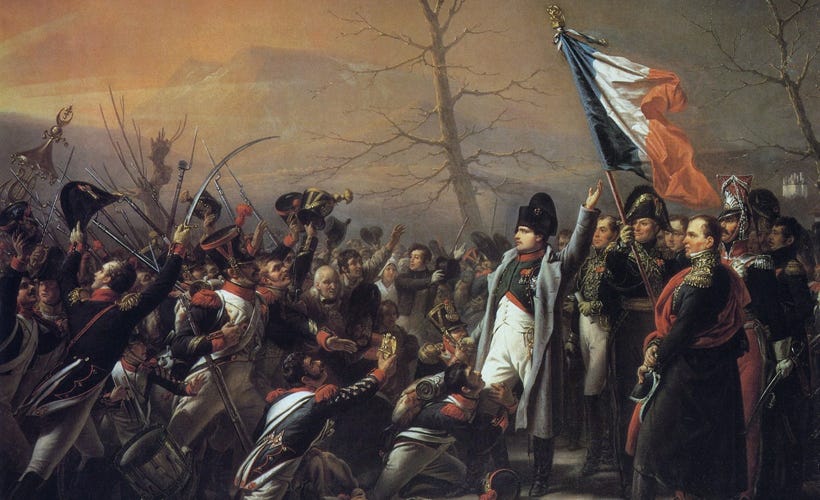
After the French Revolution, France was on its knees. The country was in a constant state of disarray, literally bleeding itself to death. Napoleon Bonaparte was truly a great man, an evil man, but a great man, one of the handful of really great geniuses in history. He perceived that his own grandeur depended on France getting back on its feet, and this in turn depended on the relative prosperity of the Catholic Church, since 95% of the French people still considered themselves Catholics. But the Revolution, of which Napoleon was a fervent adept, had declared war on the Church. One of the most duplicitous creatures to ever rise to power, Napoleon decided that he would make an agreement with the Holy See in such a way as to give the Church just enough freedom to make people happy, but not enough to be truly free. The reins of power would be in his hands.
The principal instrument of this connivance was what came to be known as the Concordat. This agreement between the Holy See and the French Republic stipulated, among many other things, that bishops would be appointed by Napoleon, but would receive canonical institution from the Holy See. In other words, no bishop could be appointed without being on good terms with the dictator. Incidentally, this is still the way things function in Alsace and Lorraine. Even in the French Republic today, the Holy See never appoints a bishop without running the name by the French government first.
To make this masterplan work, however, Napoleon had to solve another problem. Most of the bishops in place at the time of the Revolution had refused the Civil Constitution of the Clergy – which would have essentially made the clergy employees of the state, removing their independence to teach the faith – and this meant that, in an era long before mandatory retirement for bishops became the fashion, he would have to deal with these recalcitrant bishops for a long time before getting the men he wanted in their dioceses.
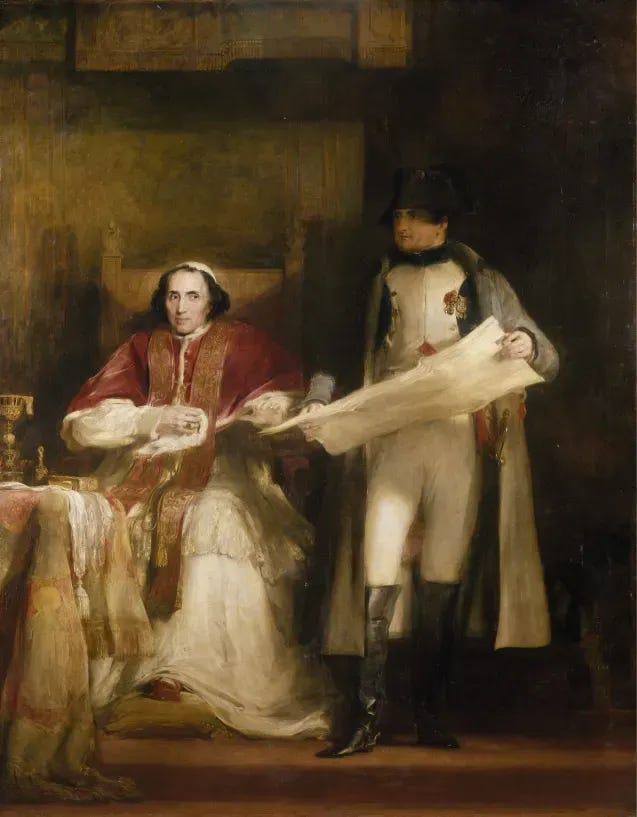
The Pope at the time, Pius VII, a Benedictine monk, was faced with a quandary. The future of the Church in France hung in the balance. Faced with a situation in which the very life of the Church in France seemed to demand a concession, he did something that seems to be without precedent in Church history and which can still shock us today: he decided to remove all the French bishops from their sees and appoint new ones that were agreeable to Napoleon. With a stroke of the pen, the Roman Pontiff simply gave in to Napoleon and deposed all the French bishops, men who for the most part had valiantly remained faithful to the Pope during the darkest years of the Revolution. With great sacrifices, most of the bishops complied, and most of the clergy and faithful followed. There was one notable exception, however. In Vendee there was resistance. How could the Pope remove bishops without them having committed any crimes? Were not bishops by divine right in the Church? At least one Bishop and a number of priests, with thousands of faithful, refused to accept the Pope’s decision and initiated a schism which came to be known as La Petite Église, the ‘Little Church’ (as opposed to the Catholic Church, which is big and spread throughout the world).
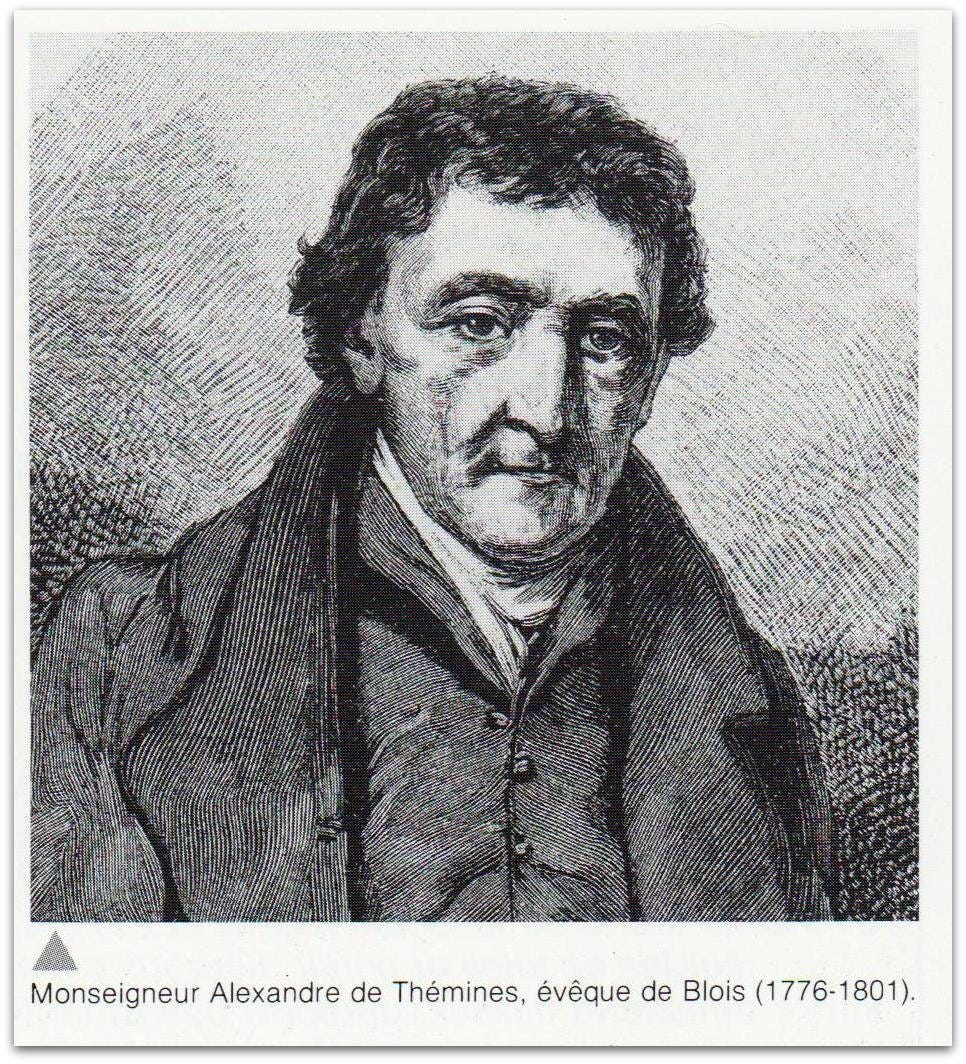
The Bishop of Blois, Alexandre de Thémines, who had heroically accepted exile when he was chased out of his diocese by Abbé Grégoire for refusing to take the oath to the Republic, now refused to accept the Concordat and his own removal from office. He would even declare himself to be the only faithful bishop in France, the one faithful to Tradition, while all others had compromised with the Revolution. And yet he declared himself to be the one truly obedient to the Pontiff, but unable to obey in this particular instance. What the Pope was asking was simple enough, and he would not have done it without very good reasons. The bishop was asked to set aside his own judgment and his own position for the good of the Church. Like all the other bishops, he was to be well provided for, but could no longer be a diocesan bishop. On his deathbed years later Bishop de Thémines would finally submit to the pontifical authority and was reconciled with the Holy See, but in the meantime he had been responsible for a schism that lasts to this day, almost two centuries later, even though the movement is bereft of priests. Because of the momentary resistance of one bishop, who declared himself truly Catholic and truly obedient to the Pope, while actually disobeying him in a matter that was squarely within the realm of the pontifical authority, there are still thousands of souls in schism today.
99% Catholic?
Of course, there are circumstances in which an obedient person must not obey. If a man tells his wife or daughter to engage in prostitution in order to bring more money into the household, she must obviously refuse. If a bishop asks a priest to teach heresy, he must decline. If the Pope orders a bishop to ordain an unworthy priest, he cannot comply. In these cases, the virtue of obedience does not come into play, because the object of a moral virtue must be something that is good or at least indifferent. When there is a clear order, and it is obvious that the order does not involve a sin, one must obey a legitimate superior. If one chooses to disobey, one cannot declare oneself to be obedient. ‘Let us not love in word or speech but in deed and in truth’ (1 Jn 3:18).
The devil has an extraordinary knack for convincing all of us that we are doing the right thing when we are actually doing something very wrong. The parable of the publican and the sinner that we read this week reminds us there is only one way to avoid such hypocrisy, and that is the humility which strikes its own breast, bows its head, and does not even consider oneself worthy to look up at others.
The implication for us, whoever we may be, is not difficult to identify: we must be true. True to God and all that He has revealed. True to ourselves, in the sense of truly listening to the castigation of our conscience when we have done wrong. True to others, by not living a double life, saying one thing and living another way.
We recently considered how a novel language, in spite of the best intentions, has made it possible for many to live in continual delusions about the truth. The constant reformulation of what we believe ultimately leads to not being so sure about it. But the uncompromising reaction to this delusion can and does lead to another deception: that of being in the truth in theory and all the while rejecting part of that truth in practice. One cannot reject 1% of Catholicism and remain 100% Catholic. One cannot declare loyalty to Tradition and condone something that Tradition condemns. Otherwise the dual personality censored by St Pius X just puts on another mask, comes in the back door, and takes control of our lives. The Church is grande, not petite, and we do not help her by preferring our nearsightedness to the farsighted and tranquil gaze she poses upon history.
 | A guest post by
|
Thank you for this contribution and for me, it confirms the point that we are at THE Great Impasse.
Confiteor, deo omnipotenti, and vobis fratres, quia peccavi nimis, cogitatione, verbo, opere et ommisione, mea culpa, mea culpa, mazxima culpa, ...orare pro me ad dominum deum nostrum
And your point hits home so soundly, even as I write this i know I practice and say, and attend, but live in constant state of "really"? my only consolation is at least being in a state of wanting righteousness. I dont know where else to be. NO doubt duplicitious but not wanting to address.